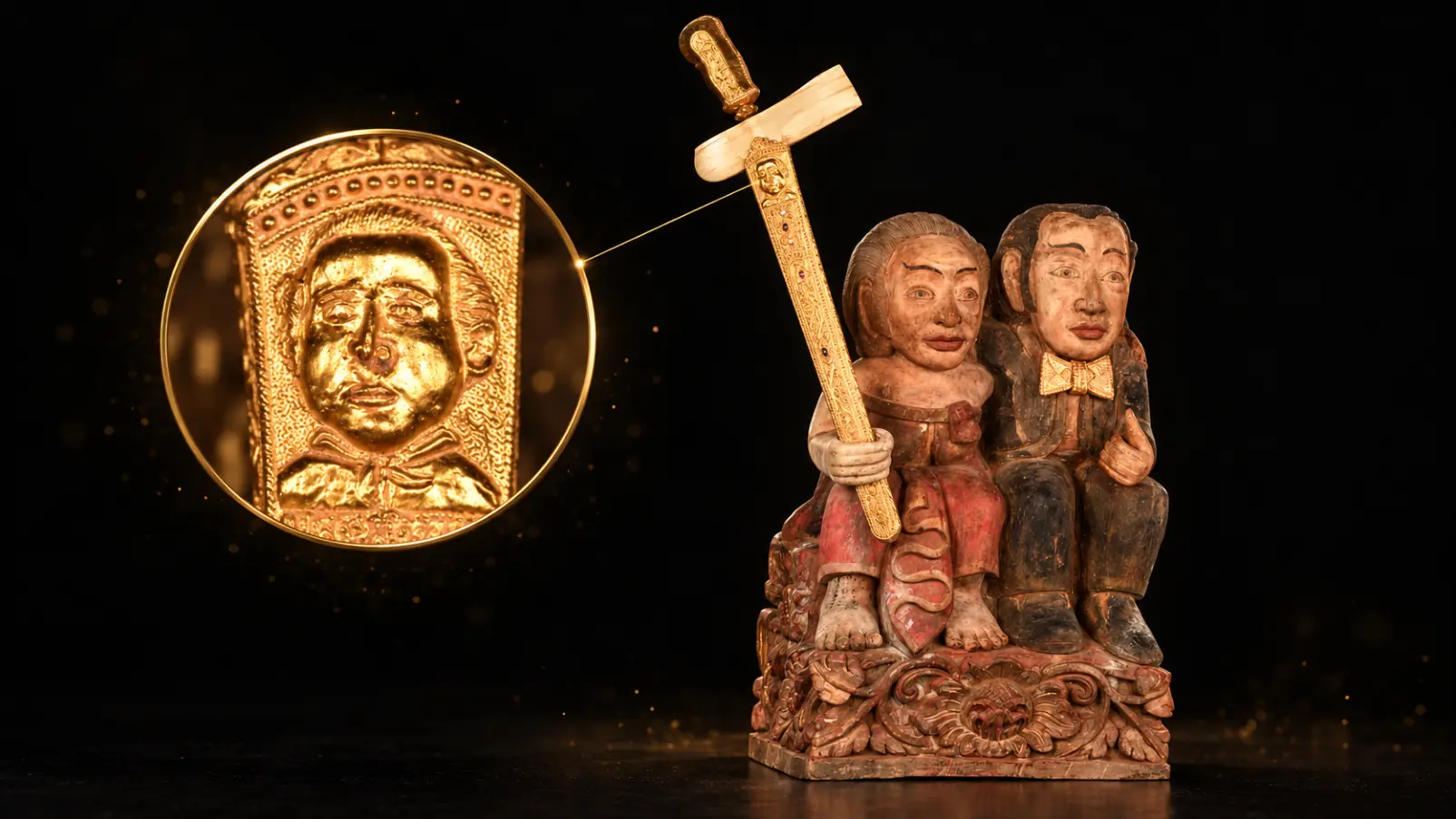
A historic statue in Bali tells the story of an unusual diplomatic relationship between a Danish merchant and a Balinese king. The artwork featuring Mads Lange and Gusti Ngurah Gede Kesiman represents more than two figures standing together because it reflects how trust, trade, and cultural understanding shaped Bali’s connection with the outside world during the 19th century.
For people who want to understand Bali beyond its temples, beaches, and traditional performances, this story offers another perspective. It shows that Bali was never isolated from global interactions. Through trade and diplomacy, the island developed relationships with people from different backgrounds while maintaining its own cultural identity.
The statue becomes a visual record of this relationship. Every element, from the presence of the royal figure to the keris held in his hand, carries a deeper meaning about respect, authority, and friendship.
Mads Lange was a Danish merchant who arrived in Bali during the 19th century and established his trading activities in Kuta. At that time, Bali was connected with regional and international trade networks, creating opportunities for foreign merchants to interact with local kingdoms.
Unlike many traders who focused only on commercial activities, Mads Lange developed strong relationships with Balinese rulers. His ability to understand local customs and communicate across cultural differences helped him gain trust among influential figures in Bali.
His relationship with Gusti Ngurah Gede Kesiman became one of the most remarkable examples of cross-cultural connection in Balinese history. Their story shows that diplomacy was not always built through official agreements. Sometimes it grew through personal trust, mutual respect, and long-term relationships.
One of the most significant details in the statue is the keris held by Gusti Ngurah Gede Kesiman. In Balinese tradition, a keris represents authority, protection, spiritual meaning, and the identity of the person who carries it.
For a Balinese ruler, a keris was closely connected with royal dignity. It was not simply an object used for defense but a symbol of legitimacy and responsibility. The presence of this royal item in the statue strengthens the message that the relationship between the two figures was based on recognition and respect.
The keris associated with Mads Lange carries additional historical value. Its connection with his name, represented through the inscription “Tuan Lange”, shows how a foreign merchant became part of a local historical memory.
Many visitors know Bali because of its artistic traditions and spiritual atmosphere, but the island has always been connected with wider networks. Long before modern tourism existed, Bali interacted with merchants, travelers, and communities from different regions.
The story of Mads Lange and Gusti Ngurah Gede Kesiman reflects this wider history. Their relationship shows how economic connections could develop into cultural relationships when built on understanding and respect.
This is why the statue carries importance beyond the people it represents. It captures a moment when Bali was negotiating its place in a changing world while preserving its own traditions and values.
Historical objects often reveal stories that cannot be understood by looking at physical appearance alone. A statue may seem like a simple artwork, but behind its details there can be stories about politics, identity, friendship, and cultural exchange.
The Mads Lange statue allows visitors to see Bali from a different angle. Instead of viewing the island only as a destination of beauty and tradition, people can also understand it as a place shaped by international relationships and historical encounters.
For those interested in cultural heritage, these stories create a deeper connection with Bali. Understanding the people behind historical objects helps visitors appreciate why certain traditions and artworks continue to hold meaning today.
Bali’s heritage is not only found in ancient temples or traditional ceremonies. It is also preserved through historical objects, royal stories, and cultural memories passed through generations. The story of Mads Lange and Gusti Ngurah Gede Kesiman is one example of how art can preserve a meaningful relationship between different worlds.
A heritage-focused cultural experience can help visitors understand the context behind Bali’s historical landmarks rather than simply seeing them as attractions. Through local interpretation and storytelling, historical places become more meaningful because every object has a story behind it.
Continue exploring Bali’s cultural heritage through our page, where you can find curated cultural journeys that connect historical stories, traditional arts, and the deeper identity of the island.