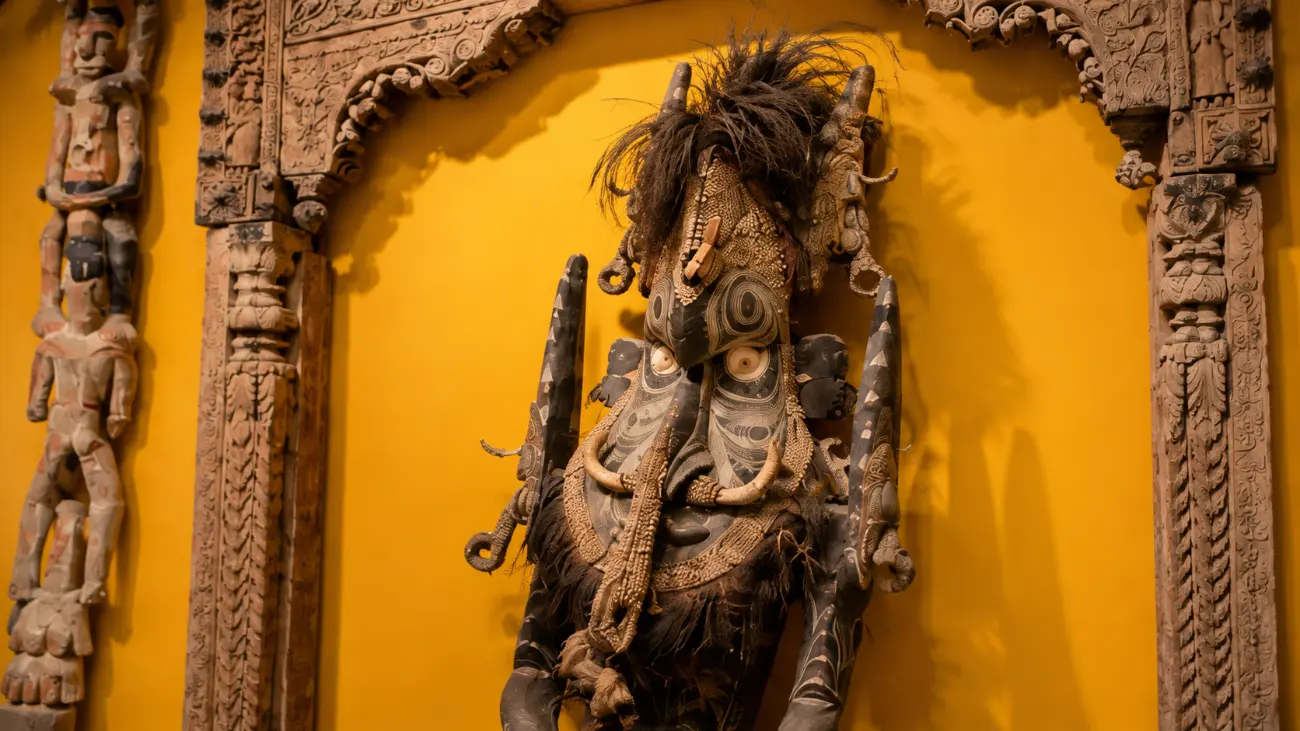
The Scary Room at Museum PBC is not designed to showcase horror objects, but to present ancestral artifacts, ritual objects, and traditional artworks connected to spiritual beliefs in Papua and Eastern Indonesia. The room feels mysterious because the objects inside were created for cultural practices involving ancestors, identity, protection, and connections between humans and the unseen world.
When visitors first enter the room, many people naturally ask the same question. Why do these wooden figures, masks, and tribal objects feel intimidating? Are they symbols of fear, or do they represent something deeper?
The answer lies in understanding the original purpose of these artworks. Many traditional objects from Indonesia’s eastern regions were never created as decorations. They were created as cultural vessels that carried memories, stories, and relationships between communities and their ancestors.
The name “Scary Room” comes from the emotional experience created by the collection rather than from the original meaning of the objects.
Inside the room, visitors encounter human-like wooden sculptures with unusual proportions, powerful facial expressions, masks covered with natural materials, traditional weapons, shields, and woven textiles. For people unfamiliar with these traditions, these forms can appear mysterious or even unsettling.
However, in their original cultural context, these objects often represented respect, remembrance, and spiritual connection.
The room presents a different way of seeing art. Instead of asking whether an object looks beautiful or frightening, visitors are invited to understand what role it played in the life of the people who created it.
One of the most dominant elements in the Scary Room is the collection of wooden human figures.
These sculptures share several visual characteristics:
In many Indonesian and Melanesian traditions, ancestral figures represent a connection between living communities and previous generations.
These sculptures are not simply portraits of individuals. They often represent genealogy, social memory, and the continuing presence of ancestors within community life.
This explains why the figures may look different from classical sculptures found in Western art traditions. The purpose is not realistic human representation. The purpose is communication through symbols.
The Scary Room strongly reflects themes associated with Papuan ancestral art, especially the carving traditions of the Asmat people.
Asmat wood carving is internationally recognized for its relationship with ancestors, rituals, and community identity. One of the most famous examples is the bisj pole, a monumental wooden carving created as part of ancestral remembrance traditions.
Museums such as The Metropolitan Museum of Art and other anthropology collections explain that bisj poles were connected with ceremonies honoring deceased relatives and maintaining relationships between the living and ancestral worlds.
The important point is that these carvings were not created to represent something frightening. They represented continuity.
A carved ancestor figure carried the idea that a person’s identity did not end with death. Their story remained part of the community.
Another striking group of objects in the room consists of masks and face-like carvings.
At first glance, these objects may appear mysterious because they often contain exaggerated features such as:
In traditional societies, masks often served a completely different purpose from modern decorative art.
They could be used during ceremonies, performances, and rituals where individuals temporarily represented different spiritual or ancestral identities.
The mask transformed the wearer’s role. It created a connection between everyday human life and symbolic worlds involving ancestors, nature, and belief systems.
The room also displays objects connected with protection and identity, including shields and traditional weapons.
In many parts of Papua and Eastern Indonesia, shields are more than practical objects. Their carved designs can communicate:
The artwork carved onto these objects often carries meaning beyond visual decoration.
A shield could represent who a person belonged to, where they came from, and the cultural values they carried.
The woven textiles displayed in the room add another important layer to the collection.
Without the textiles, visitors might interpret the room only as a collection of mysterious sculptures. The fabrics reveal another side of the story.
Traditional ikat textiles from Eastern Indonesia are often connected with:
Patterns woven into fabric can function like historical records. They preserve stories that are passed from one generation to another.
The combination of wood carvings and textiles creates a broader picture of traditional societies where art was integrated into daily life, ceremonies, and identity.
One of the most interesting aspects of Museum PBC’s collection is the contrast between tribal ancestral art and royal Indonesian art.
Palace traditions from Java often emphasize:
Meanwhile, ancestral art from Papua and Eastern Indonesia emphasizes:
Neither tradition exists to replace the other. They represent different ways Indonesian societies have understood humanity, power, and the relationship between visible and invisible worlds.
The interpretation of these objects is not unique to Museum PBC.
International museums with Indonesian and Melanesian collections often present similar themes. Institutions such as The Metropolitan Museum of Art and anthropology museums explain that ancestral carvings should be understood through their cultural roles rather than judged only by their appearance.
This approach changes the visitor’s experience.
A figure that initially appears intimidating becomes a historical document. A mask that seems mysterious becomes evidence of a community’s beliefs. A carved wooden object becomes a record of human relationships across generations.
The deeper story of the Scary Room is not about fear. It is about memory.
The objects inside represent a world where art, spirituality, history, and identity are closely connected.
The room shows how Indonesian communities preserved knowledge before written records became dominant. Stories were carried through wood, fabric, masks, and ceremonial objects.
For visitors, the biggest transformation happens when they stop seeing these objects as strange and start seeing them as expressions of human experience.
The “scary” feeling comes from encountering a worldview different from our own.
The meaning behind the objects is much more human. They are about ancestors, belonging, and the desire of communities to remember where they came from.
If you want to continue reading about how Museum PBC connects ancient Indonesian artifacts, tribal traditions, and royal heritage, you can visit the museum’s collection pages for a broader view of its cultural journey.