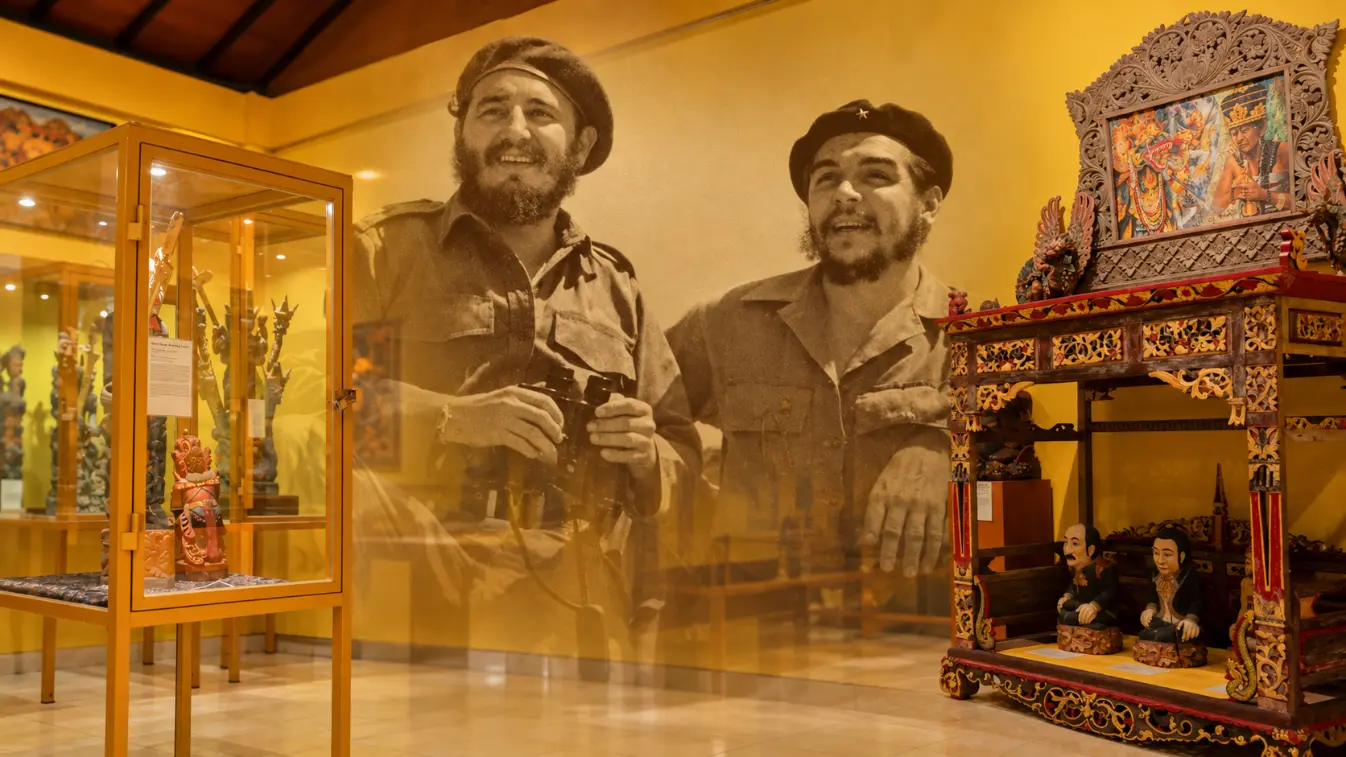
The Fidel Castro Room at Museum PBC presents a collection connected to Fidel Castro and the historical journey surrounding one of the most recognized figures of the 20th century. To understand why this collection holds significance, it is important to look beyond the name itself and understand the historical period, relationships, and events connected to Fidel Castro. This includes the well known connection between Fidel Castro and Che Guevara during the Cuban Revolution.
For visitors, a natural question may appear. Why does a museum in Bali present a collection related to Fidel Castro?
The answer comes from the way Museum PBC approaches historical collections. The value of an object is not only determined by its material, age, or appearance. The story behind the object, its connection to a historical figure, and the journey that brought it into a collection also create meaning.
Museum collections often preserve more than physical objects. They preserve stories.
The Fidel Castro Room at Museum PBC represents this idea by presenting objects connected to Fidel Castro as part of a wider historical narrative. Fidel Castro became one of the most discussed figures of the 20th century after leading the Cuban Revolution in 1959 and shaping Cuba’s role in international affairs.
Objects associated with historical figures can provide a personal connection to a specific period. They allow visitors to understand history through something tangible rather than only through written records.
This is the perspective behind the Fidel Castro Room at Museum PBC. The collection creates a bridge between an object and the historical story surrounding it.
Fidel Castro’s influence cannot be separated from the events that shaped Cuba during the second half of the 20th century.
After the Cuban Revolution, Fidel Castro became the leader of Cuba and remained a major figure in global discussions, especially during the Cold War period. His decisions and leadership influenced Cuba’s relationship with other countries and made him one of the most recognizable political figures of his era.
However, historical figures are rarely understood in isolation. Their journeys are shaped by the people who worked alongside them and the events they experienced.
This is where Che Guevara becomes relevant.
Fidel Castro and Che Guevara became connected through the Cuban Revolution.
They met in Mexico during the 1950s when Che Guevara joined Fidel Castro’s revolutionary movement. Together with other members of the movement, they participated in the struggle that eventually led to the fall of Batista’s government in 1959.
Their relationship became one of the most recognized partnerships in modern history. Fidel Castro became the leader of Cuba after the revolution, while Che Guevara became known internationally for his revolutionary activities beyond Cuba.
For anyone trying to understand Fidel Castro’s historical background, the connection with Che Guevara provides important context. It explains the environment, relationships, and events surrounding Fidel Castro during one of the most significant periods of his life.
However, the Fidel Castro Room at Museum PBC focuses on the collection connected to Fidel Castro. Che Guevara helps explain the historical background, but he is not presented as part of the Museum PBC collection.
The importance of a historical object often comes from its story.
A concept known as provenance explains how an object’s origin, ownership history, and connection to important people or events contribute to its value.
An object connected to Fidel Castro represents more than a personal possession. It can become a record of a certain period, reflecting the people, decisions, and circumstances surrounding that time.
This is why historical collections continue to attract attention. They allow visitors to understand how personal objects can become part of a much larger story.
Museum PBC presents collections through the connection between objects and the stories behind them.
The Fidel Castro Room reflects this approach by showing how a collection connected to a global historical figure can become part of a broader cultural narrative. The focus is not only on the identity of Fidel Castro, but also on how objects preserve memories and historical connections.
This approach creates a different way of experiencing history. Visitors can see how an object becomes meaningful because of the people, places, and moments connected to its journey.
The story behind the Fidel Castro Room at Museum PBC shows how museums can connect personal collections with global history.
Fidel Castro and Che Guevara remain widely discussed because of their roles in one of the most significant political movements of the 20th century. Understanding their relationship helps visitors understand the historical environment connected to Fidel Castro’s life.
Through the Fidel Castro Room, Museum PBC presents how objects connected to a historical figure can preserve stories that continue across generations.
Visitors interested in the background of this collection can find more information through the Fidel Castro Room page at Museum PBC, where the collection is presented within the museum’s wider historical narrative.