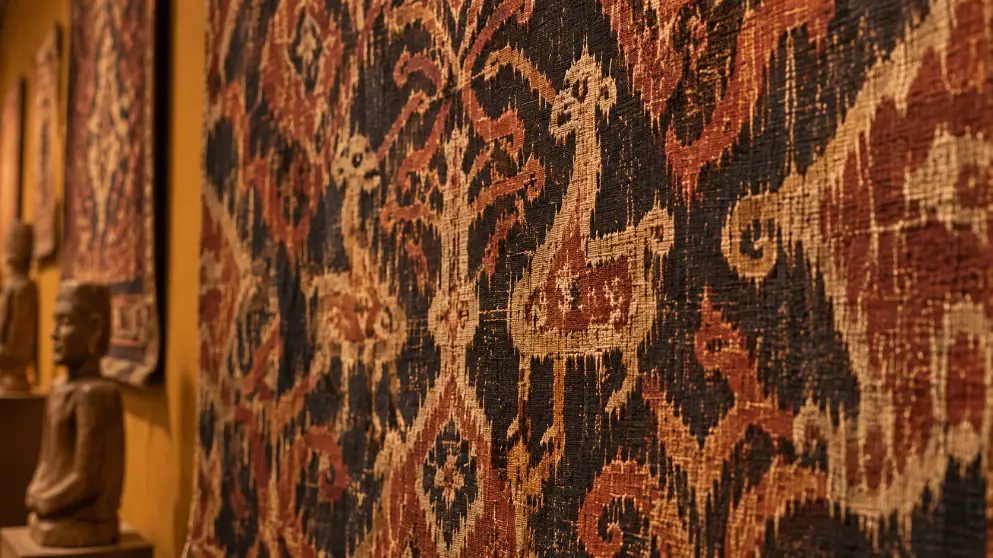
Indonesian ikat is more than a traditional fabric. It is a handwoven textile created through a distinctive process in which threads are tied and dyed before they are woven together, producing patterns that become part of the fabric itself. Across Indonesia, these textiles reflect the creativity, identity, and cultural traditions of the communities that make them. Understanding ikat means understanding how everyday materials can carry generations of knowledge and cultural memory.
Unlike printed fabrics, ikat patterns are formed through careful planning before the weaving process begins. The placement of colors and patterns requires skill because the threads must align correctly when they are brought together on the loom. Even small differences in tension or positioning can influence the final appearance. This is one reason traditional ikat weaving remains such a remarkable expression of Indonesian craftsmanship.
The process begins with yarn that is arranged into bundles and tied at selected points to resist dye. The exposed sections absorb the chosen colors, while the protected areas retain their original shades or previous colors. Depending on the design, the tying and dyeing process may be repeated several times before the threads are ready for weaving. Only when the prepared yarns are carefully arranged on the loom does the intended pattern gradually take shape.
There are different forms of ikat, including warp ikat, weft ikat, and double ikat. Each technique creates patterns through the preparation of different thread systems, with double ikat requiring especially precise coordination. The complexity of the process explains why traditional woven textiles often represent months of work and accumulated artisan knowledge.
Although ikat, batik, and songket are all important Indonesian textile traditions, their techniques are different. Batik uses wax-resist methods to create patterns on fabric, while ikat produces designs by dyeing yarn before weaving. Songket, meanwhile, is known for its supplementary woven threads, often featuring gold or silver effects. These differences reveal the remarkable diversity of Indonesia's textile heritage.
The value of traditional ikat extends beyond its appearance. In many Indonesian communities, textiles are connected with ceremonies, social identity, family traditions, and important stages of life. Certain patterns and colors may carry meanings associated with local beliefs, ancestry, or community identity. However, these meanings are not universal, and understanding a textile requires attention to the particular region and tradition behind it.
The knowledge behind these fabrics is also part of their cultural importance. Weaving techniques, dye preparation, and pattern traditions are often passed between generations through direct practice and observation. When these skills disappear, communities risk losing more than a method of making cloth. They may also lose an important connection to their history and collective identity.
Modern manufacturing can produce fabric quickly and in large quantities, but traditional weaving offers a different kind of value. Each handmade textile reflects decisions about materials, colors, patterns, and techniques that have developed over time. Some traditions also continue to use natural dyes and locally sourced materials, although practices vary between regions. Preserving these textiles helps keep traditional knowledge visible and gives future generations an opportunity to understand the cultural stories woven into them.
One meaningful way to appreciate traditional weaving is to encounter the textiles themselves rather than relying only on photographs or descriptions. Seeing the texture, construction, colors, and intricate patterns at close range can help explain the patience and expertise involved in creating each piece. It also provides an opportunity to consider how regional traditions have shaped Indonesia's rich textile landscape.
At Museum P.B.C. in Tabanan, Bali, the Ikat Room presents a collection of Indonesian handwoven textiles, including ceremonial fabrics and patterns associated with cultural traditions from different parts of the archipelago. The museum provides a setting where these objects can be appreciated not simply as decorative works, but as expressions of craftsmanship, identity, and heritage. For readers interested in the relationship between traditional weaving and Indonesian cultural history, the collection offers a natural continuation of this story.
To see how these textile traditions are represented in the museum's collection, visit the Ikat Room at Museum P.B.C.. You can also refer to the museum's visitor information when planning a visit.